
Fashion Designing
Introduction
Fashion designing is the art of creating stylish and attractive clothing, accessories, and footwear. It combines creativity, technical skills, and knowledge of fabrics to produce designs that are both fashionable and comfortable. Fashion designers create outfits for different occasions, seasons, and cultures while keeping up with the latest fashion trends.
What is Fashion Designing?
Fashion designing is the process of planning, sketching, and making clothes and fashion accessories. Designers use their imagination to create unique styles that match customers’ needs and current fashion trends. It is one of the most creative and exciting career fields in the world.
Importance of Fashion Designing
Fashion designing plays an important role in modern society. It allows people to express their personality, confidence, and culture through clothing. The fashion industry also creates millions of jobs and contributes to the economy by supporting textile manufacturing, retail businesses, and online shopping.
Types of Fashion Designing
1. Haute Couture
Haute Couture
Haute Couture is the highest level of fashion designing. The term comes from the French language and means “high sewing” or “high dressmaking.” Haute Couture clothing is custom-made for a specific customer instead of being produced in standard sizes. Every dress is carefully designed and stitched by skilled professionals using the finest fabrics, luxurious materials, and detailed handwork.
Each Haute Couture outfit is unique because it is made according to the customer’s body measurements, preferences, and style. Designers spend many hours or even weeks creating a single dress. These garments often include beautiful embroidery, lace, beads, sequins, pearls, and other decorative elements that require great skill and attention to detail.
Haute Couture collections are usually presented during special fashion shows in cities such as Paris. These designs inspire future fashion trends and represent the creativity and craftsmanship of the designer. Because of the expensive materials, handmade techniques, and the time required to produce each garment, Haute Couture clothing is very costly and is often purchased by celebrities, royalty, and wealthy clients for weddings, red carpet events, and other special occasions.
Features of Haute Couture
- Made specially for one customer.
- Uses premium-quality fabrics and materials.
- Designed with hand stitching and detailed craftsmanship.
- Perfect fit based on body measurements.
- Unique and exclusive designs.
- Expensive because of high-quality work and materials.
- Often worn at luxury events, fashion shows, and ceremonies.
Advantages of Haute Couture
- Perfect fitting and maximum comfort.
- High-quality fabrics and excellent finishing.
- Unique designs that are not mass-produced.
- Long-lasting clothing with superior craftsmanship.
- Gives a luxurious and elegant appearance.
Disadvantages of Haute Couture
- Very expensive.
- Takes a long time to design and produce.
- Not suitable for everyday wear.
- Limited availability because each outfit is custom-made.
Examples of Haute Couture Clothing
- Bridal wedding gowns
- Red carpet dresses
- Royal ceremonial outfits
- Luxury evening gowns
- Custom-made designer suits
2. Ready-to-Wear (Pret-a-Porter)
2. Ready-to-Wear (Prêt-à-Porter)
Ready-to-Wear, also known by its French name Prêt-à-Porter, refers to clothing that is designed by fashion designers and manufactured in standard sizes for the general public. Unlike Haute Couture, these garments are not custom-made for one person. They are produced in different sizes such as Small (S), Medium (M), Large (L), and Extra Large (XL), making them easy to purchase from stores or online.
Ready-to-Wear clothing combines style, quality, and affordability. Designers create fashionable collections based on current trends, and manufacturers produce these designs in larger quantities. This allows more people to enjoy stylish clothing without paying the high cost of custom-made garments.
These clothes are suitable for everyday wear, office use, college, parties, and casual outings. Many famous fashion brands release Ready-to-Wear collections every season, introducing new styles, colors, and designs to meet customer preferences.
Features of Ready-to-Wear
- Made in standard sizes (S, M, L, XL, etc.).
- Produced in large quantities.
- Available in clothing stores and online shops.
- Stylish and follows current fashion trends.
- More affordable than Haute Couture.
- Suitable for daily use and special occasions.
Advantages of Ready-to-Wear
- Easy to buy from stores and websites.
- Costs less than custom-made clothing.
- Available in many designs, colors, and sizes.
- Saves time because no custom stitching is required.
- Offers fashionable clothing for a wide range of customers.
Disadvantages of Ready-to-Wear
- May not fit every person perfectly.
- Many people can own the same design.
- Limited options for personal customization.
- Quality may vary depending on the brand.
Examples of Ready-to-Wear Clothing
- T-shirts
- Jeans
- Shirts
- Dresses
- Jackets
- Office wear
- School and college uniforms
- Casual and party wear
3. Mass Market Fashion
Mass Market Fashion is a type of fashion designing in which clothing is produced in very large quantities for the general public. These clothes are designed to be affordable, practical, and easily available in shopping malls, clothing stores, supermarkets, and online marketplaces. The main goal of mass market fashion is to provide stylish clothing at low prices so that people from different income groups can easily purchase them.
Fashion designers study current trends and customer preferences before creating new collections. Manufacturers then produce thousands or even millions of identical garments using modern machines and efficient production methods. This large-scale production helps reduce manufacturing costs, making the clothes more affordable for customers.
Mass market fashion includes everyday clothing such as T-shirts, jeans, shirts, trousers, skirts, dresses, school uniforms, sportswear, and jackets. These clothes are designed for daily use and are available in a variety of colors, styles, and standard sizes.
Although mass market fashion is affordable and convenient, it often focuses more on quantity than exclusivity. Since the same designs are produced in large numbers, many people may wear identical clothing. In recent years, many fashion companies have also started using eco-friendly materials and sustainable production methods to reduce the environmental impact of mass production.
Features of Mass Market Fashion
- Produced in very large quantities.
- Available at affordable prices.
- Sold in clothing stores, shopping malls, and online shops.
- Made in standard sizes for all customers.
- Follows current fashion trends.
- Designed for everyday wear.
- Uses fast and efficient manufacturing methods.
Advantages of Mass Market Fashion
- Affordable for most people.
- Easily available in many stores.
- Offers a wide variety of styles and colors.
- Saves time because clothes are ready to purchase.
- Suitable for daily wear, school, work, and casual occasions.
Disadvantages of Mass Market Fashion
- Designs are not unique because many people wear the same clothes.
- Quality may be lower than luxury fashion.
- Limited customization options.
- Fast production can sometimes create environmental pollution and textile waste.
Examples of Mass Market Fashion
- Everyday T-shirts
- Jeans and trousers
- Casual shirts
- Hoodies and sweatshirts
- School uniforms
- Sportswear
- Affordable dresses
- Jackets and coats
4. Sustainable Fashion
Sustainable Fashion is a type of fashion designing that focuses on protecting the environment and promoting ethical production. It aims to create clothing in ways that reduce pollution, save natural resources, and ensure fair treatment of workers. Sustainable fashion encourages the use of eco-friendly materials, responsible manufacturing processes, and long-lasting clothing instead of fast fashion.
Fashion designers and clothing brands use organic cotton, recycled fabrics, bamboo fibers, hemp, and other environmentally friendly materials to make garments. They also try to reduce waste by recycling leftover fabric, using less water and energy during production, and minimizing the use of harmful chemicals.
Sustainable fashion also supports fair wages, safe working conditions, and ethical labor practices. It encourages people to buy high-quality clothes that last longer, repair damaged garments instead of throwing them away, and recycle or donate old clothing. These practices help reduce textile waste and protect the environment.
As people become more aware of climate change and environmental issues, sustainable fashion is becoming increasingly popular around the world. Many fashion brands are now adopting eco-friendly production methods to create stylish clothing while protecting the planet.
Features of Sustainable Fashion
- Uses eco-friendly and recycled materials.
- Reduces pollution and textile waste.
- Promotes fair wages and safe working conditions.
- Saves water and energy during production.
- Encourages recycling and reusing clothing.
- Produces durable and high-quality garments.
- Supports environmentally responsible fashion.
Advantages of Sustainable Fashion
- Protects the environment.
- Reduces waste and pollution.
- Uses natural resources responsibly.
- Supports ethical treatment of workers.
- Produces long-lasting and durable clothing.
- Encourages responsible shopping habits.
Disadvantages of Sustainable Fashion
- Clothing is often more expensive than fast fashion.
- Eco-friendly materials may not be available everywhere.
- Production can take more time.
- Some sustainable brands have limited product collections.
Examples of Sustainable Fashion
- Organic cotton T-shirts
- Recycled polyester jackets
- Bamboo fiber clothing
- Handmade eco-friendly bags
- Recycled denim jeans
- Clothing made from recycled plastic bottles
- Second-hand or thrift clothing
- Upcycled fashion products
Skills Required for Fashion Designing
A successful fashion designer should have the following skills:
- Creativity and imagination
- Drawing and sketching skills
- Knowledge of fabrics and textiles
- Color matching and styling
- Sewing and pattern-making skills
- Communication and teamwork
- Problem-solving ability
- Understanding of fashion trends
Fashion Designing Process
The fashion designing process includes several important steps:
- Research current fashion trends.
- Create design ideas and sketches.
- Select suitable fabrics and materials.
- Make patterns for the garments.
- Stitch and create the sample.
- Test the fitting and make improvements.
- Produce the final collection.
- Market and sell the designs.
Career Opportunities in Fashion Designing
Fashion designing offers many career options, including:
- Fashion Designer
- Textile Designer
- Fashion Illustrator
- Costume Designer
- Fashion Stylist
- Fashion Merchandiser
- Fashion Blogger
- Boutique Owner
- Fashion Consultant
- Fashion Entrepreneur
Advantages of Fashion Designing
- Encourages creativity and innovation.
- Offers exciting career opportunities.
- Provides opportunities to work internationally.
- Helps people express their personality through fashion.
- Supports the growth of the textile and fashion industries.
Challenges of Fashion Designing
- High competition in the fashion industry.
- Constantly changing fashion trends.
- Tight deadlines for collections.
- Need for continuous learning and creativity.
- Managing production costs and customer expectations.
Future of Fashion Designing
The future of fashion designing is becoming more digital and sustainable. Designers now use computer software, 3D design tools, artificial intelligence (AI), and online fashion platforms to create and sell their collections. Eco-friendly fashion and smart clothing are also becoming increasingly popular.
Conclusion
Fashion designing is a creative and rewarding profession that combines art, innovation, and business. It allows designers to create beautiful clothing that reflects culture, personality, and modern trends. With dedication, creativity, and the right skills, anyone can build a successful career in the fashion industry.
Fashion Designing Rules
1. Understand Your Target Audience
A fashion designer should first understand who the clothing is being designed for. Factors such as age, gender, lifestyle, culture, and personal preferences help in creating designs that meet customers’ needs. Knowing the target audience increases customer satisfaction and the chances of success.
2. Follow Fashion Trends
Fashion trends change every season, so designers should stay updated with the latest styles, colors, fabrics, and patterns. Following trends helps designers create modern and attractive collections while adding their own creative ideas.
3. Choose High-Quality Fabrics
The quality of fabric is one of the most important parts of fashion designing. Good-quality materials improve comfort, durability, and the overall appearance of the garment. Designers should select fabrics that match the purpose of the clothing.
4. Focus on Comfort
Fashion should not only look beautiful but also feel comfortable. Clothing should fit well, allow easy movement, and be suitable for the weather and occasion. Comfortable clothing makes customers more satisfied.
5. Maintain Proper Measurements
Correct body measurements are essential for creating well-fitting garments. Designers should carefully measure the customer’s body or follow standard size charts to ensure a proper fit.
6. Use Suitable Colors
Color selection is very important in fashion designing. Designers should choose colors that match the design, season, skin tones, and current fashion trends. A good color combination makes clothing more attractive.
7. Keep Designs Creative and Original
Fashion designers should create unique and original designs instead of copying others. Creativity helps a designer build a strong identity and stand out in the fashion industry.
8. Ensure Quality Stitching and Finishing
Neat stitching and proper finishing improve the appearance and durability of clothing. Every garment should be carefully checked before it is sold to ensure there are no defects.
9. Respect Cultural and Ethical Values
Designers should respect different cultures, traditions, and social values when creating clothing. Fashion should be inclusive, respectful, and suitable for different communities.
10. Practice Sustainable Fashion
Designers should reduce waste, use eco-friendly fabrics, recycle materials, and avoid unnecessary pollution. Sustainable fashion helps protect the environment and supports responsible production.
11. Pay Attention to Details
Small details such as buttons, zippers, embroidery, collars, pockets, and accessories can greatly improve the overall design. Careful attention to detail makes garments look more professional.
12. Keep Improving Skills
Fashion designers should continue learning new techniques, sewing methods, computer design software, and industry trends. Continuous learning helps designers remain competitive and successful.
13. Balance Style and Function
A good fashion design should be both stylish and practical. Clothing should not only look fashionable but also serve its purpose, whether for work, sports, casual wear, or formal events.
14. Test the Garment Before Production
Before producing clothing in large quantities, designers should create a sample garment. This helps identify fitting problems, design flaws, or material issues so improvements can be made.
15. Build Customer Trust
Honesty, quality products, fair pricing, and good customer service help designers build a strong reputation. Satisfied customers are more likely to return and recommend the brand to others.
Fashion Tips for Beginners
Fashion is not only about following trends; it is also about choosing styles that feel comfortable and suitable for different occasions. Beginners can improve their fashion knowledge by understanding colors, fabrics, patterns, and basic styling techniques.
Some useful tips include:
- Choose suitable colors and combinations.
- Understand different fabric types.
- Keep outfits appropriate for the occasion.
- Focus on comfort and practicality.
- Follow trends while maintaining your own style.
- Pay attention to accessories and overall presentation.
Fashion Styling
Fashion styling involves combining clothes, colors, accessories, and footwear to create a complete and attractive look. Good styling helps create a balanced appearance for different occasions.
Fashion Accessories
Accessories are an important part of fashion. Bags, shoes, belts, scarves, watches, and jewelry can complement an outfit and enhance its overall appearance.
Fashion Trends
Fashion trends introduce new styles, colors, fabrics, and designs. Designers follow changing trends to create collections that are modern and suitable for current preferences.
Fashion Creativity
Creativity is essential in fashion designing. Designers use creative ideas to develop new clothing styles, patterns, color combinations, and unique designs.
Fashion and Technology
Technology has changed the fashion industry through digital designing, online shopping, computer-aided design, and modern production techniques. These technologies help designers work more efficiently.
Fashion Color Coordination
Color coordination helps create a balanced and attractive outfit. Designers consider complementary, contrasting, and neutral colors when creating different looks.
Fabric Selection
Choosing the right fabric is important for creating comfortable and suitable clothing. Designers consider the fabric’s texture, weight, quality, and purpose before using it.
Fashion Illustration
Fashion illustration is used to present clothing ideas visually. Designers create sketches to show the shape, details, colors, and overall appearance of a design.
Fashion Collection
A fashion collection is a group of designs created around a common theme, season, color palette, or concept. Collections help designers present their ideas in an organized way.
Sustainable Fashion
Sustainable fashion focuses on reducing waste and using resources responsibly. It encourages thoughtful production, longer-lasting clothing, and environmentally responsible practices.
Fashion Industry
The fashion industry includes designing, manufacturing, marketing, and selling clothing, accessories, and other fashion products. It connects designers, brands, manufacturers, retailers, and customers.
Fashion Forecasting
Fashion forecasting helps designers understand upcoming trends in colors, fabrics, styles, and customer preferences. It helps businesses plan future collections.
Fashion Marketing
Fashion marketing promotes clothing, accessories, and brands to customers. Social media, advertisements, fashion shows, websites, and influencers are commonly used for promotion.
Fashion Show
A fashion show is an event where designers present their latest collections to an audience. Models showcase the clothing to demonstrate its style, design, and overall appearance.
Fashion Branding
Fashion branding helps a business create a unique identity. A brand can use a specific logo, color palette, design style, and message to become recognizable to customers.
Fashion Retail
Fashion retail involves selling clothing and accessories directly to customers through physical stores or online platforms. Good product presentation and customer service are important parts of fashion retail.
Fashion Career Opportunities
Fashion designing offers different career opportunities, including:
- Fashion Designer
- Fashion Stylist
- Textile Designer
- Fashion Illustrator
- Costume Designer
- Fashion Merchandiser
- Fashion Consultant
- Fashion Blogger
Conclusion
Following these fashion designing rules helps designers create beautiful, comfortable, and high-quality clothing. By combining creativity, technical skills, ethical practices, and customer satisfaction, fashion designers can build a successful career and contribute positively to the fashion industry.
Ready to Turn Your Creativity into a Career?
Fashion designing is a field where creativity, skills, and passion come together. Start learning, explore your ideas, and take the first step toward building your future in fashion.
Start Your Learning Journey with Next Gen-Z
Want to develop your creative and professional skills? Explore learning opportunities at Next Gen-Z Software House & Institute.
03019279000
🌐 www.nextgenz.org
Related Posts
Fashion Trends
Sustainable Fashion
Fashion Design Process
Career Opportunities in Fashion Designing
Why Choose Fashion Designing?
Fashion designing sirf kapray design karne ka naam nahi, balki creativity, innovation aur personal expression ka combination hai. Is field mein designers apni ideas ko unique designs mein convert karte hain aur changing fashion trends ke saath grow karte hain.
Skills Every Fashion Designer Should Have
- Creativity and imagination
- Fashion illustration
- Fabric and textile knowledge
- Color combination skills
- Sewing and pattern-making basicsDigital Marketing ServicesDigital Marketing Services
- Knowledge of current fashion trends
- Communication and teamwork
- Attention to detail Digital Marketing Services
Essential Fashion Designing Shortcut Keys
Use these essential shortcuts to make fashion designing faster, easier, and more efficient.
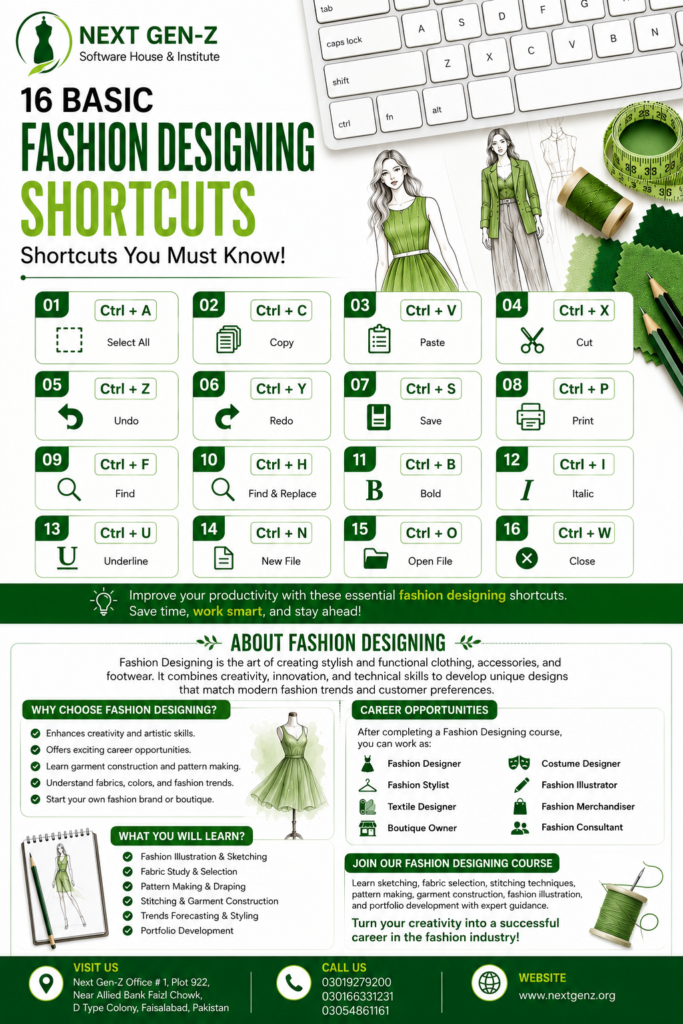
Fashion Designing Shortcuts
Master essential fashion designing shortcuts, tools, and techniques to improve your creativity and designing skills.
Explore essential fashion designing shortcuts and creative techniques to make your design journey easier and more productive.
More Fashion Designing Shortcut Keys
| Shortcut Key | Function |
|---|---|
| Ctrl + N | Create New Design |
| Ctrl + O | Open Design |
| Ctrl + S | Save Design |
| Ctrl + Shift + S | Save As |
| Ctrl + P | Print Design |
| Ctrl + Z | Undo |
| Ctrl + Y | Redo |
| Ctrl + C | Copy |
| Ctrl + V | Paste |
| Ctrl + X | Cut |
| Ctrl + A | Select All |
| Ctrl + D | Duplicate |
| Ctrl + G | Group Objects |
| Ctrl + Shift + G | Ungroup Objects |
| Ctrl + + | Zoom In |
| Ctrl + – | Zoom Out |
| Ctrl + 0 | Fit Design to Screen |
| Delete | Delete Selected Object |
| Shift + Drag | Maintain Proportion |
| Alt + Drag | Duplicate/Move Object |
Tips for Using Fashion Designing Shortcuts
Shortcut keys can save time and make design work more efficient. Beginners should practice these shortcuts regularly to become familiar with different design tools and software.
Useful tips:
- Practice shortcuts regularly.
- Learn the most frequently used keys first.
- Use shortcuts to speed up repetitive tasks.
- Keep important shortcuts as a quick reference.
- Explore software-specific shortcut keys.
Conclusion
Learning fashion designing shortcuts can make the design process faster, easier, and more organized. With regular practice and creativity, beginners can improve their designing skills and work more confidently with digital design tools. Shopify A to Z Services